



DID Myths
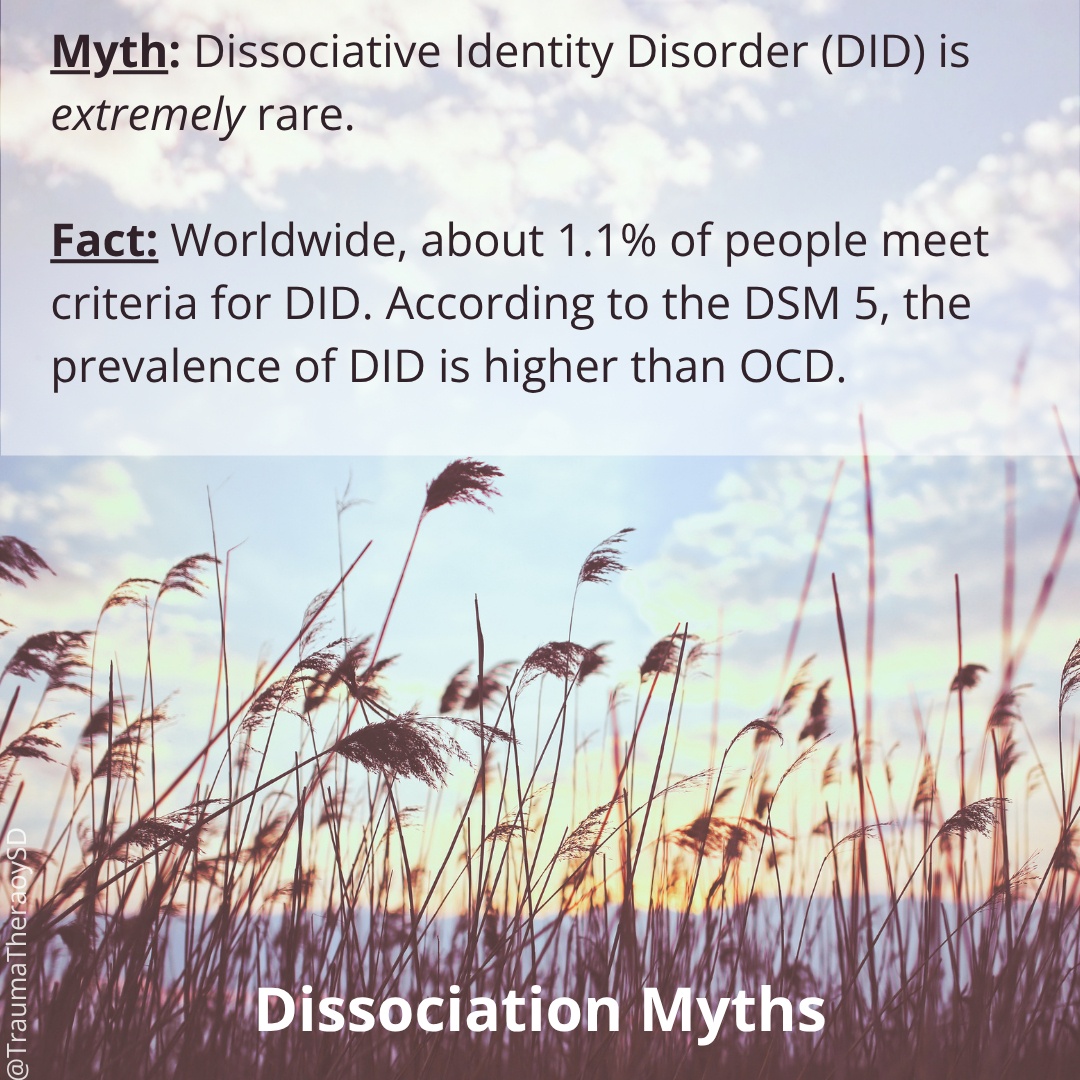
Myth: Dissociative Identity Disorder (DID) & Other Specified Dissociative Disorder (OSDD) are extremely rare.
Fact: Worldwide, about 1.1% of people meet criteria for DID. According to the DSM 5, the prevalence of DID is higher than OCD.
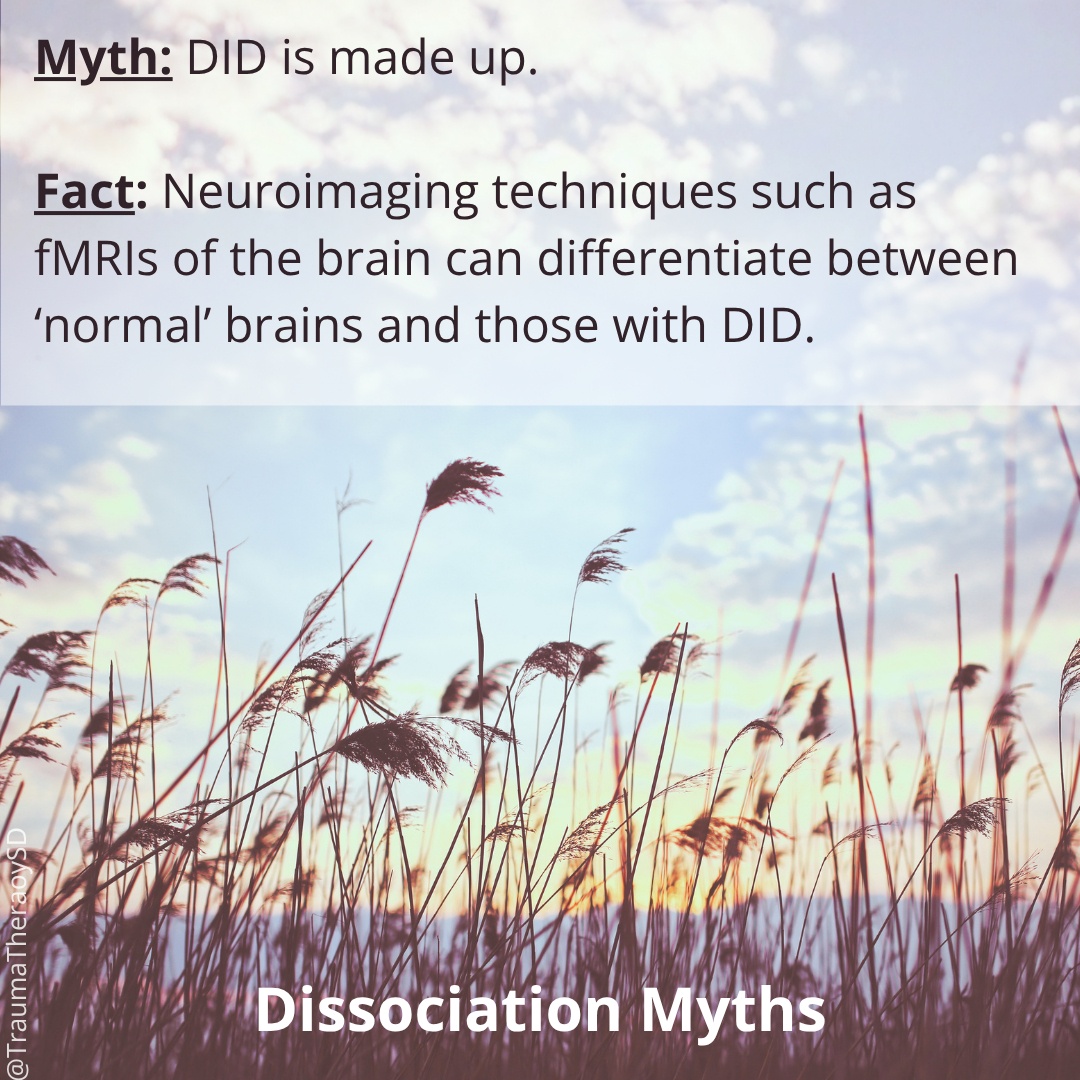
Myth: DID is made up by clients or therapists who convince clients they have DID/OSDD.
Fact: Neuroimaging techniques such as fMRIs of the brain can differentiate between ‘normal’ brains & those diagnosed with DID.
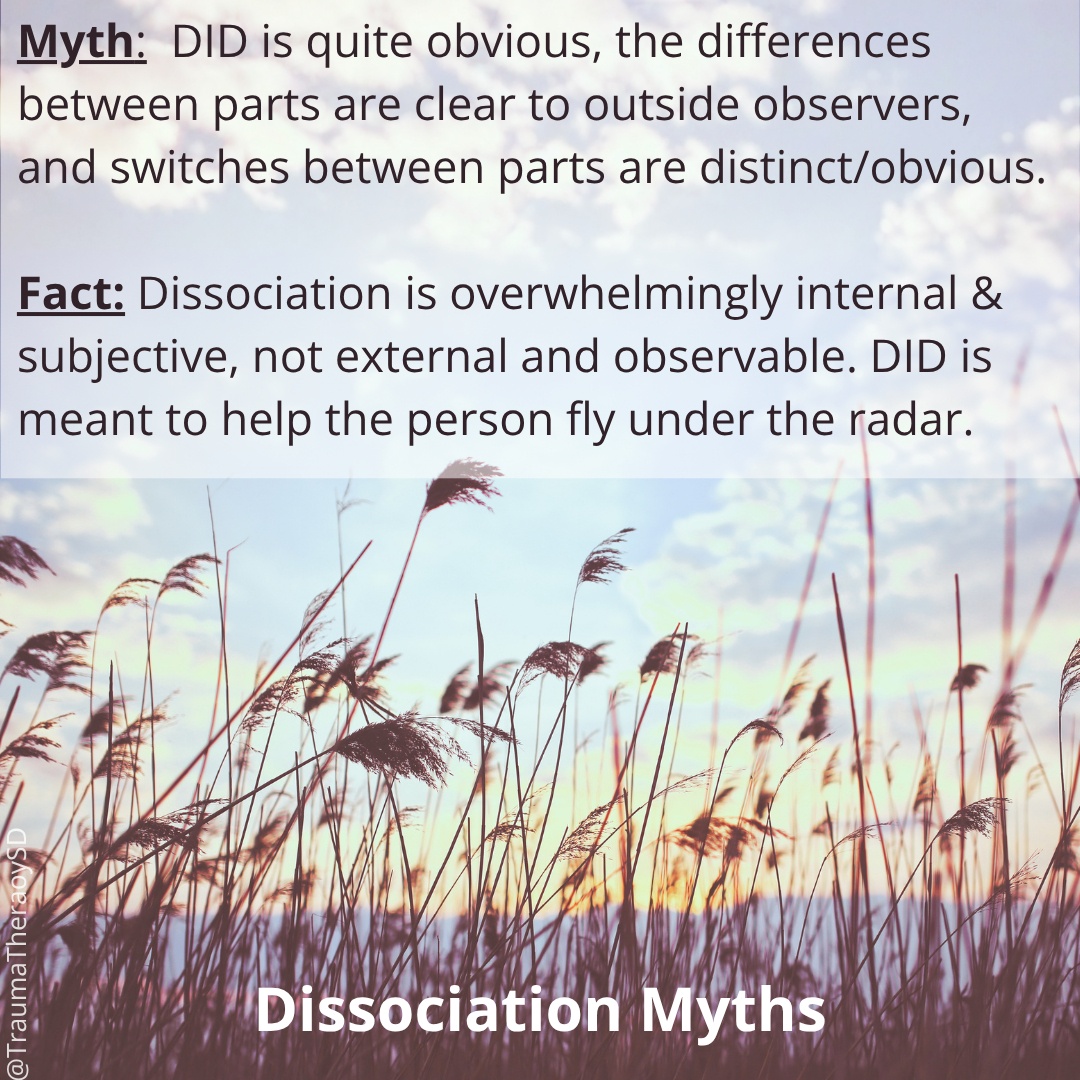
Myth: DID is quite obvious, as are switches between parts.
Fact: Dissociation is overwhelmingly internal & subjective, not external and observable. DID is meant to help the person fly under the radar.
Myth: DID is just like in the movies & those with DID/OSDD are scary & violent.
Fact: Dissociation looks different for everyone, it rarely looks like it does in the media. Those with DID/OSDD are no more likely to be violent than anyone else.
Myth: DID/OSDD is a primarily a young, white, cisgender female disorder found in the US.
Fact: DID/OSDD is found among all genders, ages, and races. DID has been researched in countries & continents around the globe.
Myth: DID is evidence of a broken mind or an inherent defect.
Fact: DID/OSDD minds are incredibly sophisticated, creative & resilient. They are result of a brain determined to survive.
Myth: Those with DID/OSDD are very sick, low functioning & never heal.
Fact: Those with DID/OSDD vary in how functional they are, just like those with any other disorder. Health, healing & having a fulfilling life are possible with DID/OSDD.
Myth: Those with DID/OSDD should never be treated with EMDR therapy.
Fact: EMDR therapy can be a powerful tool for helping heal the trauma those with DID carry, IF the therapist is properly trained & can make the needed modifications.
Are you an EMDR trained clinician wanting to learn how to identify and treat DID/OSDD?
If so I’ve created a course just for you!
Introduction to Working with Dissociative Identity Disorder: Understanding Through an EMDR Lens