




Dissociation and Gender Identity
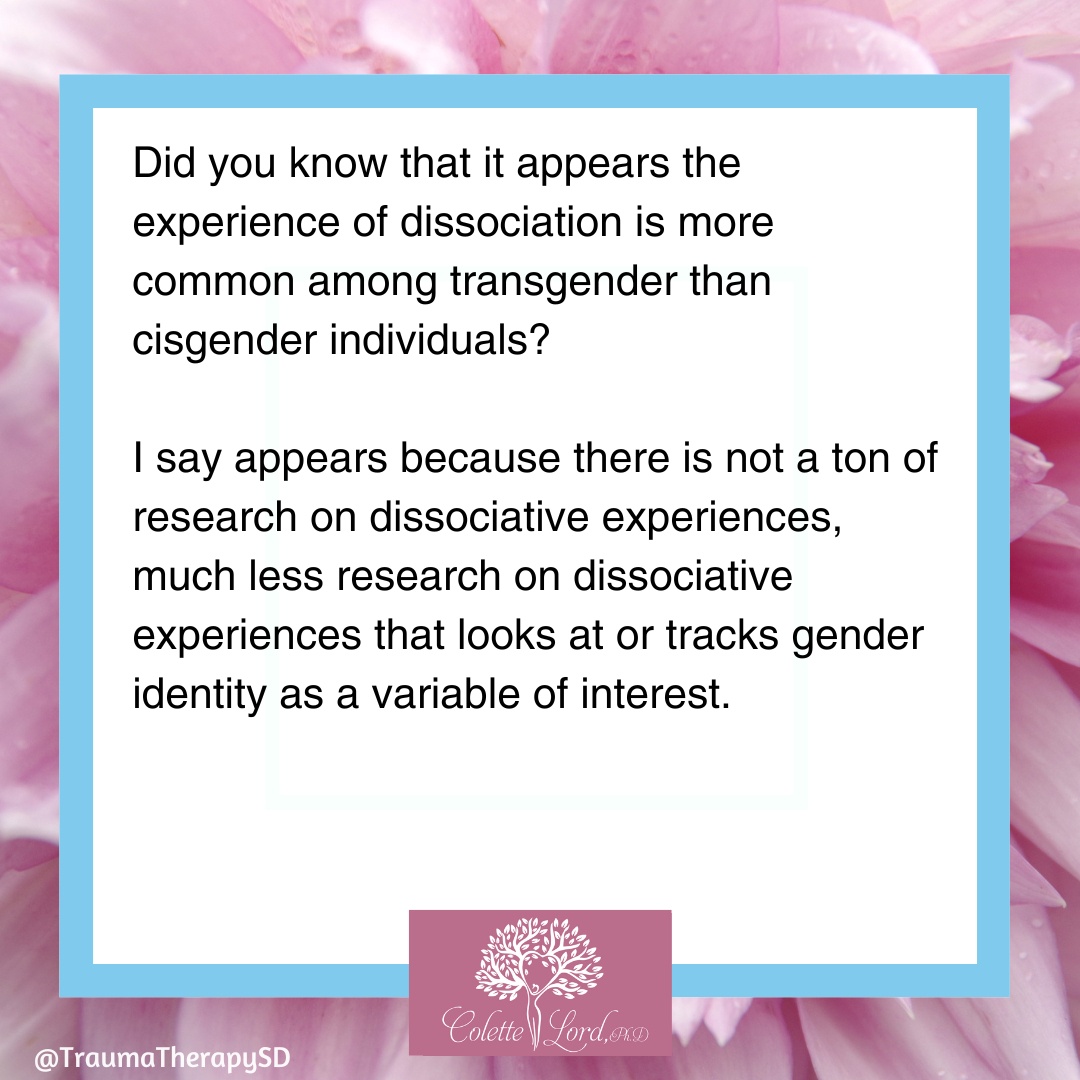
Did you know that it appears the experience of dissociation is more common among transgender than cisgender individuals?
I say appears because there is not a ton of research on dissociative experiences, much less research on dissociative experiences that looks at or tracks gender identity as a variable of interest.
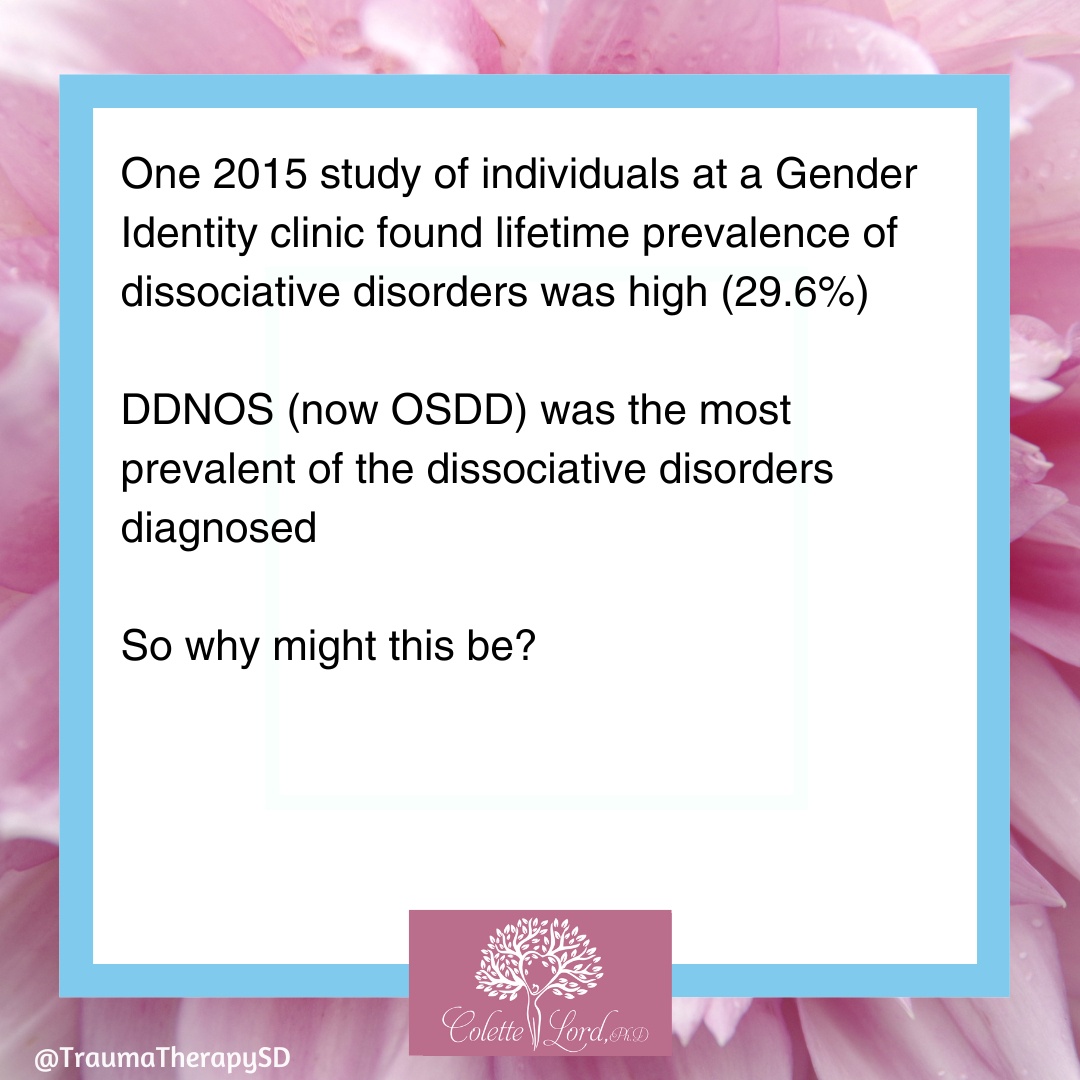
One 2015 study of individuals at a Gender Identity clinic found lifetime prevalence of dissociative disorders was high (29.6%)
DDNOS (now OSDD) was the most prevalent of the dissociative disorders diagnosed
So why might this be?
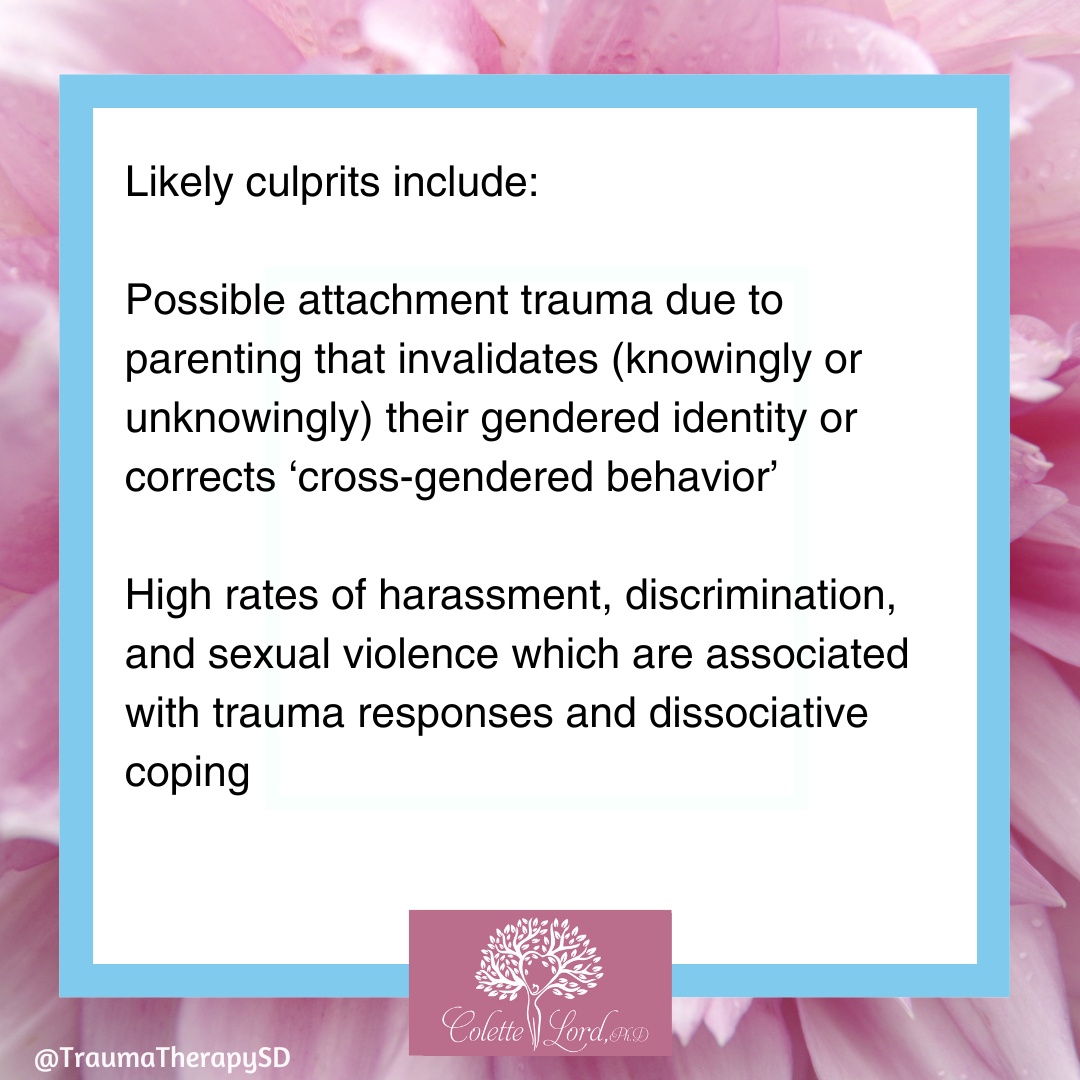
Likely culprits include:
Possible attachment trauma due to parenting that invalidates (knowingly or unknowingly) their gendered identity or corrects ‘cross-gendered behavior’
High rates of harassment, discrimination, and sexual violence which are associated with trauma responses and dissociative coping
The same 2015 study found treatment with HRT/surgery were associated with lower levels of dissociative symptoms.
This suggests that dysphoria at the lack of congruence between the body and identity may predispose trans individuals to using dissociation as a coping tool, as a means of escaping the inescapable.
Thus when that incongruence is treated with gender affirming care, their level of dissociative symptoms goes down.
References
Colizzi, M., Costa, R., &Todarello, O. (2015). Dissociative symptoms in individuals with gender dysphoria: is the elevated prevalence real?. Psychiatry research, 226(1), 173–180. https://doi.org/10.1016/j.psychres.2014.12.045
Keating, L., & Muller, R. T. (2019). Lgbtq+ based discrimination is associated with ptsd symptoms, dissociation, emotion dysregulation, and attachment insecurity among lgbtq+ adults who have experienced trauma. Journal of Trauma & Dissociation. Advance online publication. https://doi.org/10.1080/15299732.2019.1675222