



Dissociative Identity
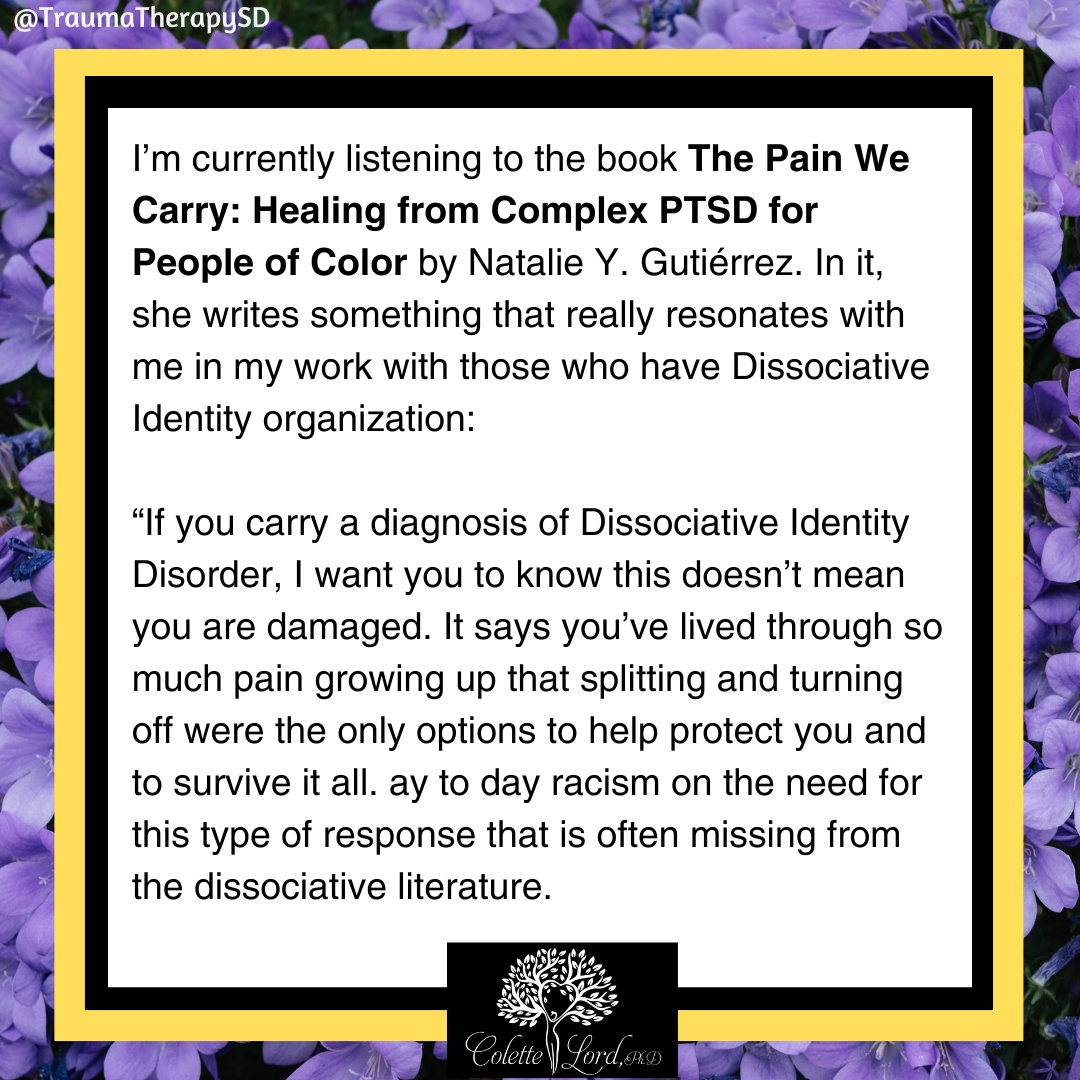
I’m currently listening to the book The Pain We Carry: Healing from Complex PTSD for People of Color by Natalie Y. Gutiérrez. In it, she writes something that really resonates with me in my work with those who have Dissociative Identity organization:
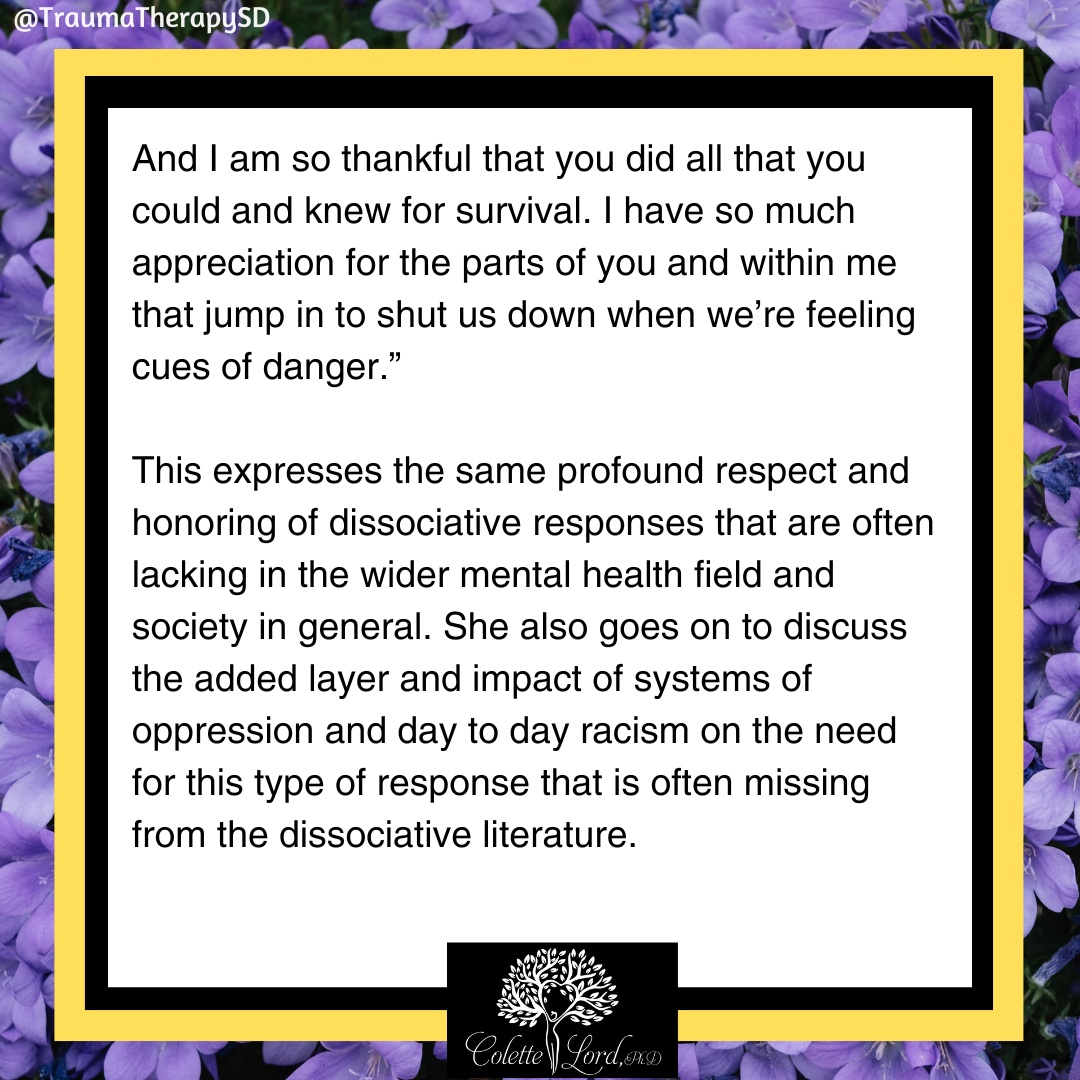
“If you carry a diagnosis of Dissociative Identity Disorder, I want you to know this doesn’t mean you are damaged. It says you’ve lived through so much pain growing up that splitting and turning off were the only options to help protect you and to survive it all. And I am so thankful that you did all that you could and knew for survival. I have so much appreciation for the parts of you and within me that jump in to shut us down when we’re feeling cues of danger.”
This expresses the same profound respect and honoring of dissociative responses that are often lacking in the wider mental health field and society in general. She also goes on to discuss the added layer and impact of systems of oppression and day to day racism on the need for this type of response that is often missing from the dissociative literature.