





How DID develops
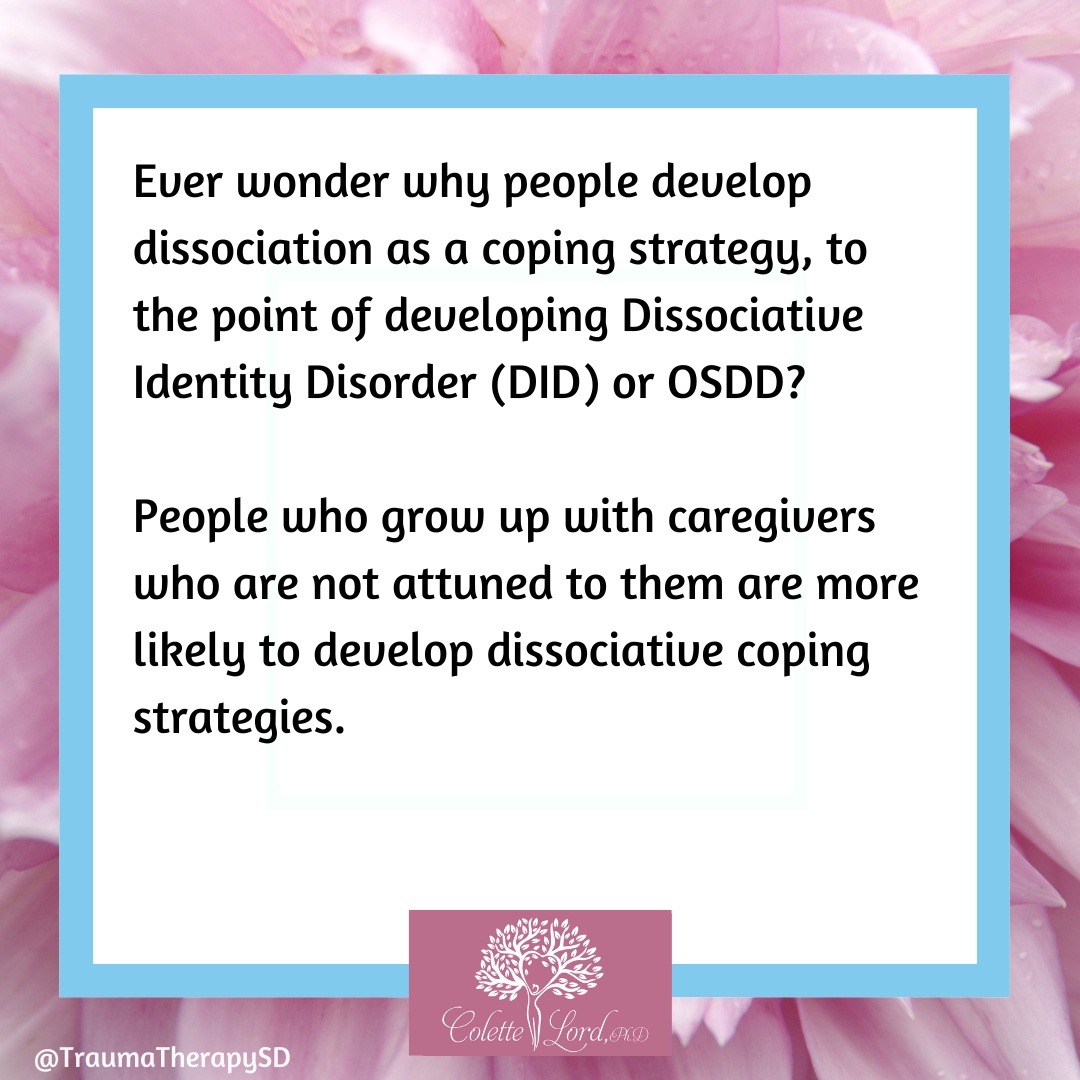
Ever wonder why people develop a reliance on dissociation as a coping strategy to the extent that they develop Dissociative Identity Disorder (DID) or OSDD?
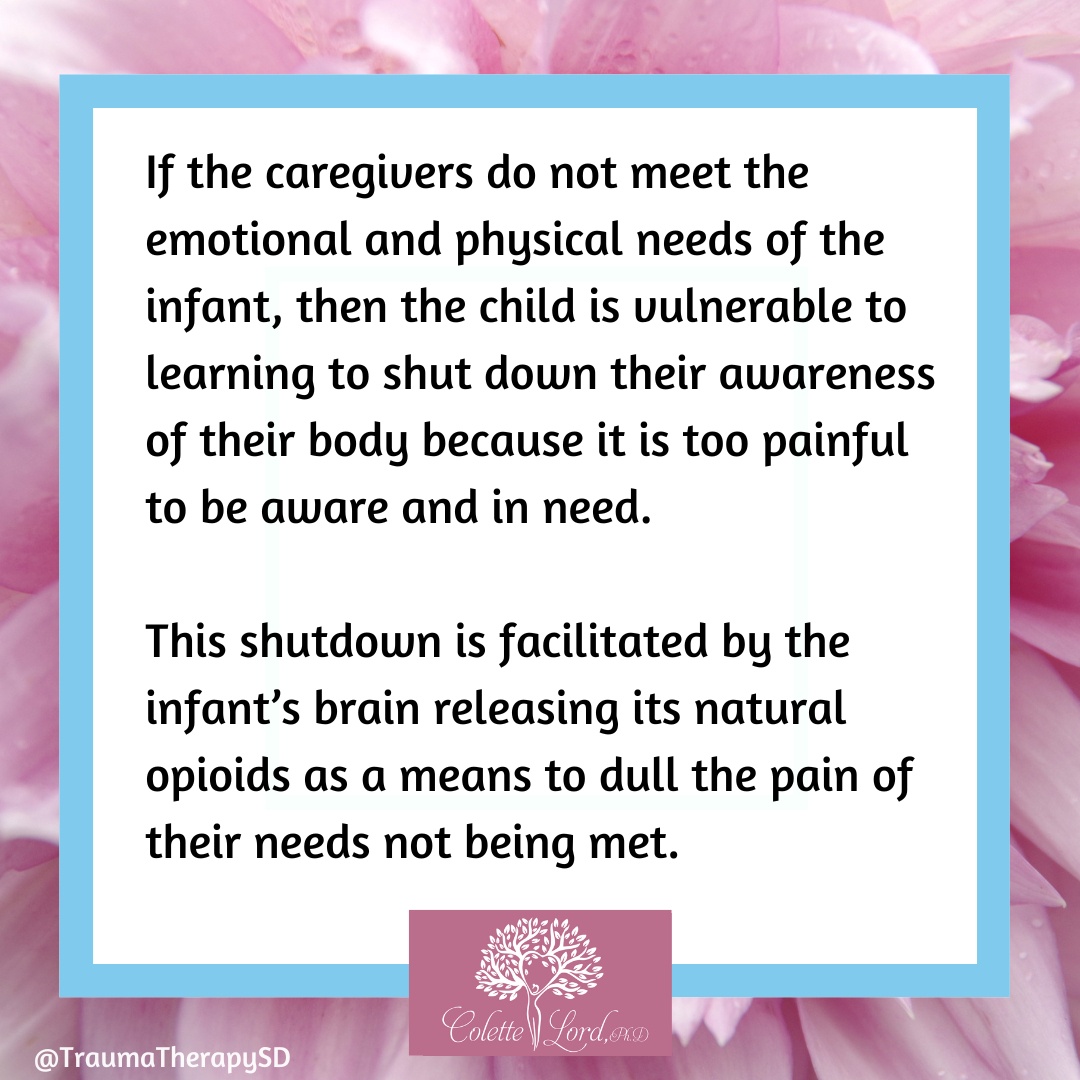
People who grow up with caregivers who aren’t attuned to them are more likely to develop dissociative coping strategies. If caregivers do not meet the emotional and physical needs of the infant, then the child is vulnerable to learning to shut down their awareness of their body because it is too painful to be aware and in need.
This shutdown is facilitated by the infant’s brain releasing its natural opioids as a means to dull the pain of their needs not being met.
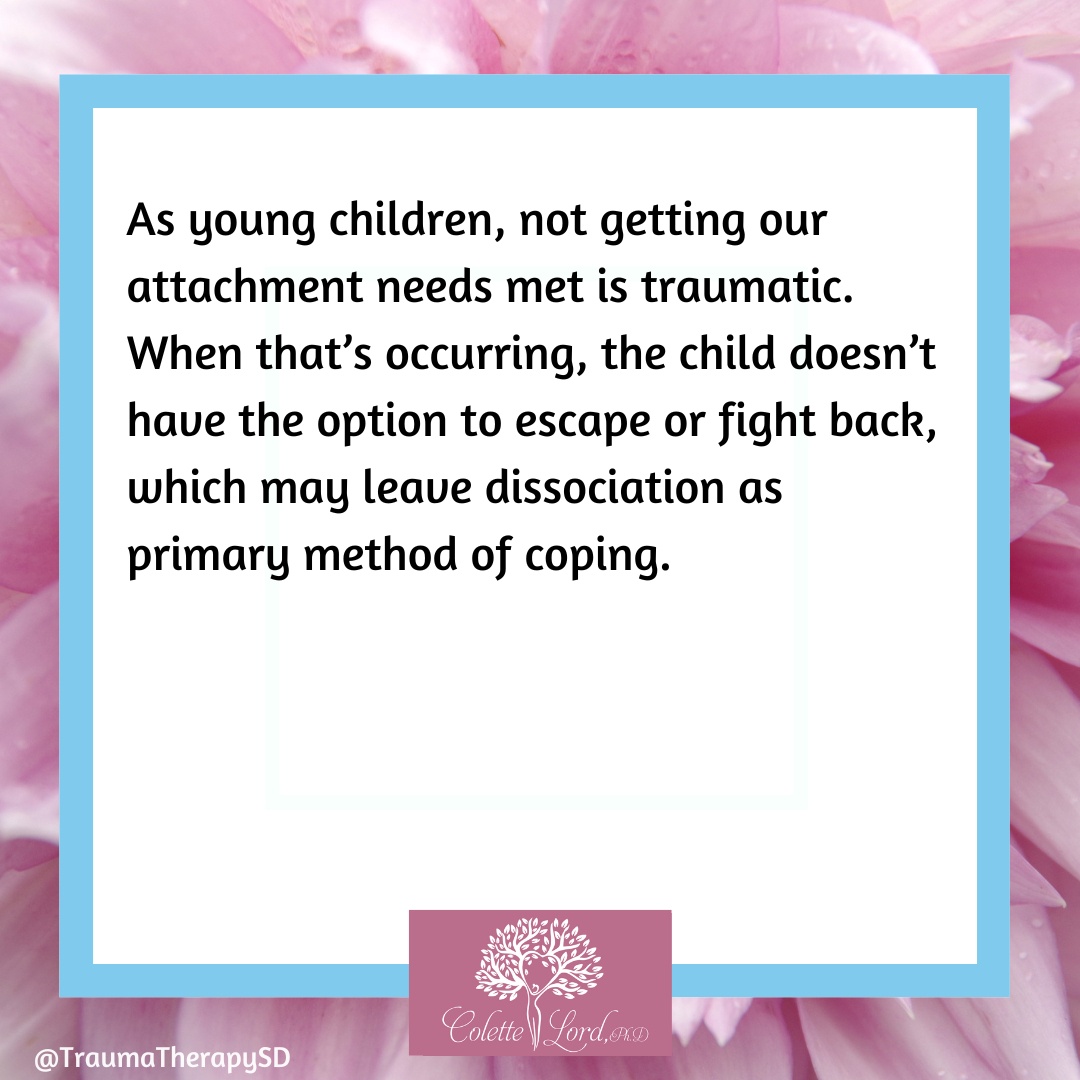
When their needs are consistently unmet, dissociate may be their only means of managing their emotional needs.
It’s in these initial caregiver relationships where children learn to regulate their emotions and integrate their experiences into a sense of self. The infant is also less likely to be able to integrate all their emotions, needs and perceptions into a coherent, unified sense of self in such a situation.
We theorize that in these early attachment relationships with caregivers affect how the infant’s nervous systems gets organized and influences the type of nervous system responses that are likely to occur under stress, such as dissociation.
These young brains are doing something incredibly sophisticated to keep the child alive and functional
If you want to learn how to identify and treat DID/OSDD as an EMDR clinician, I’ve created a training to bridge the gap between EMDR Basic training and more intensive/expensive trainings on dissociation.
Intro to Working with Dissociative Identity Disorder – Understanding Through an EMDR Lens is an on demand course, available HERE. Sign up now and get $50 off, offer ends 1/23/26.
8 APA & EMDRIA CE Credits Available through Precision EMDR™ Academy