



PTSD and Dissociation
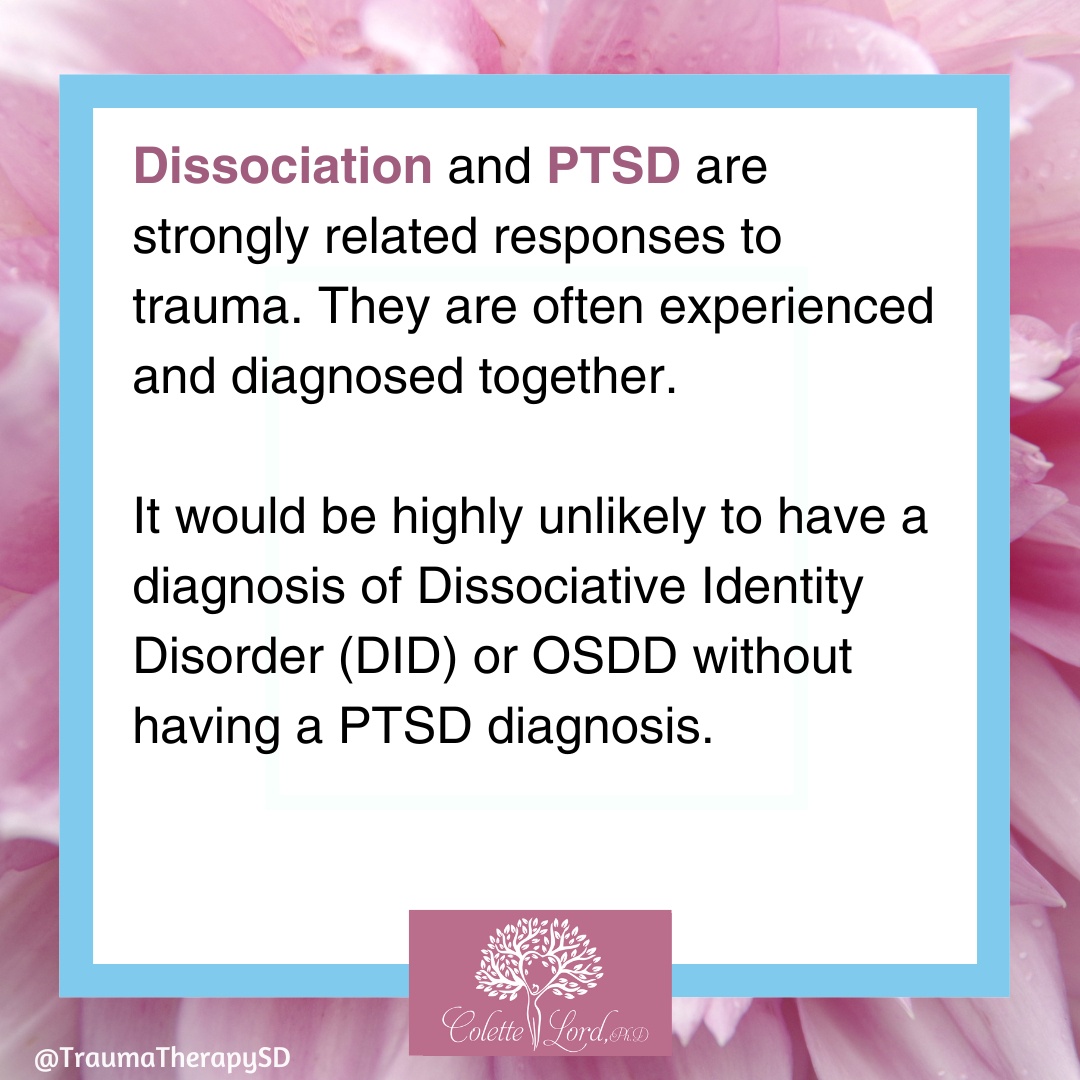
Dissociation and PTSD are strongly related responses to trauma. They are often experienced and diagnosed together.
It would be highly unlikely to have a diagnosis of Dissociative Identity Disorder (DID) or OSDD without having a PTSD diagnosis.
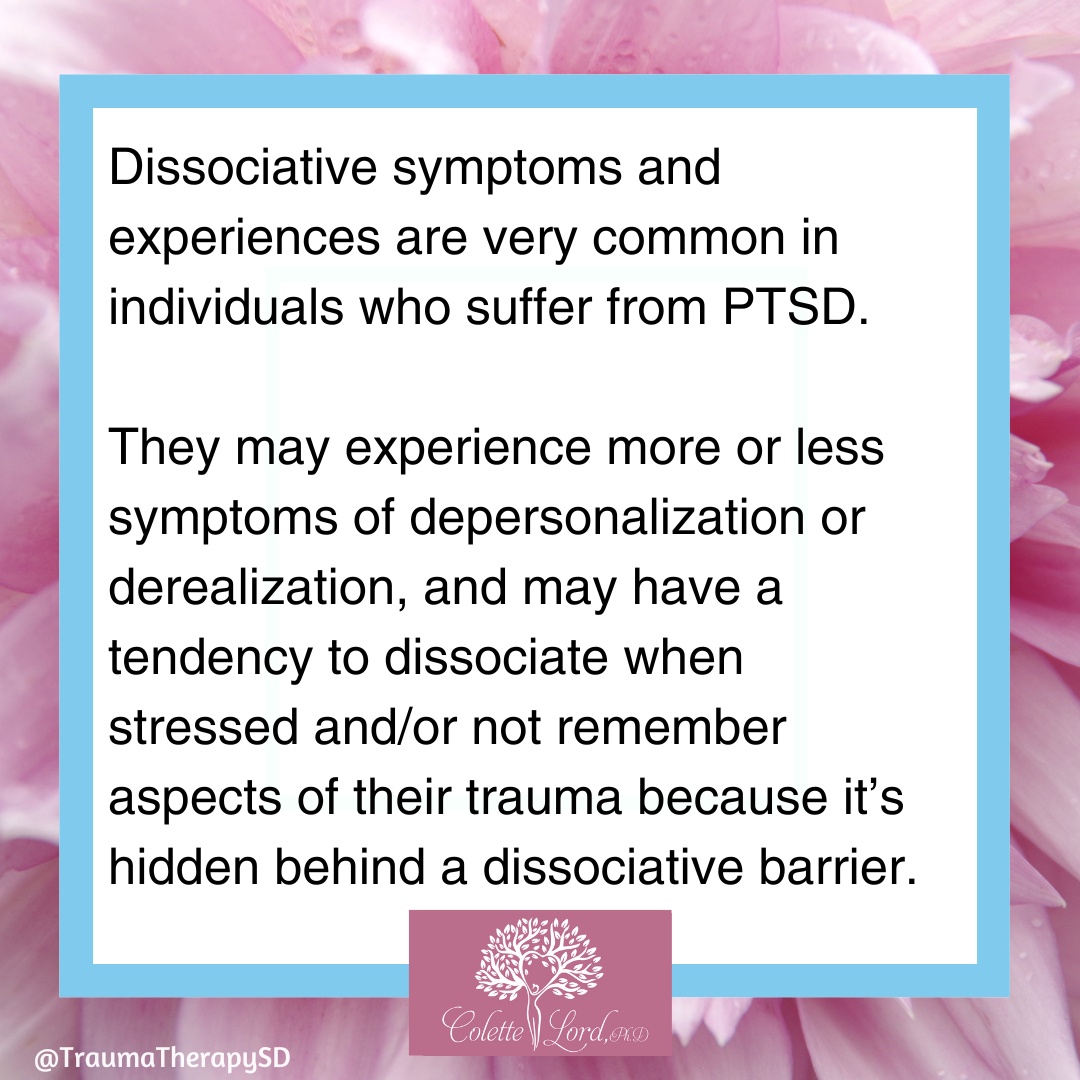
Dissociative symptoms and experiences are very common in individuals who suffer from PTSD.
They may experience more or less symptoms of depersonalization or derealization, and may have a tendency to dissociate when stressed and/or not remember aspects of their trauma because it’s hidden behind a dissociative barrier.
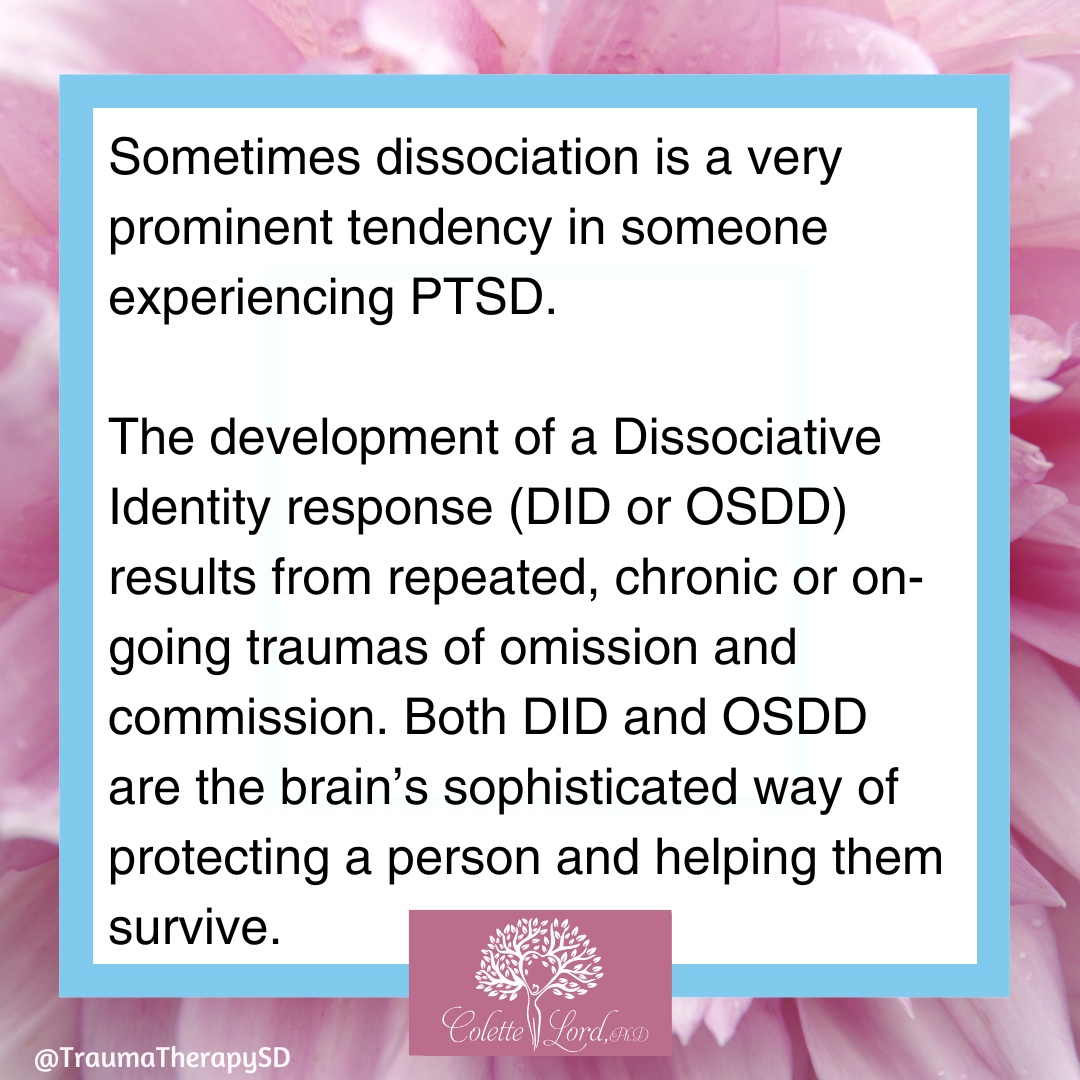
Sometimes dissociation is a very prominent tendency in someone experiencing PTSD.
The development of a Dissociative Identity response (DID or OSDD) results from repeated, chronic or on-going traumas of omission and commission. Both DID and OSDD are the brain’s sophisticated way of protecting a person and helping them survive.